MBG Mess – When Good Intentions Meet Bad Execution


By Heba Abayaa
Let’s be honest, Indonesia is in a tough spot right now. The rupiah keeps sliding against the dollar, investors are getting jittery, and ordinary people are feeling the pinch of rising prices.

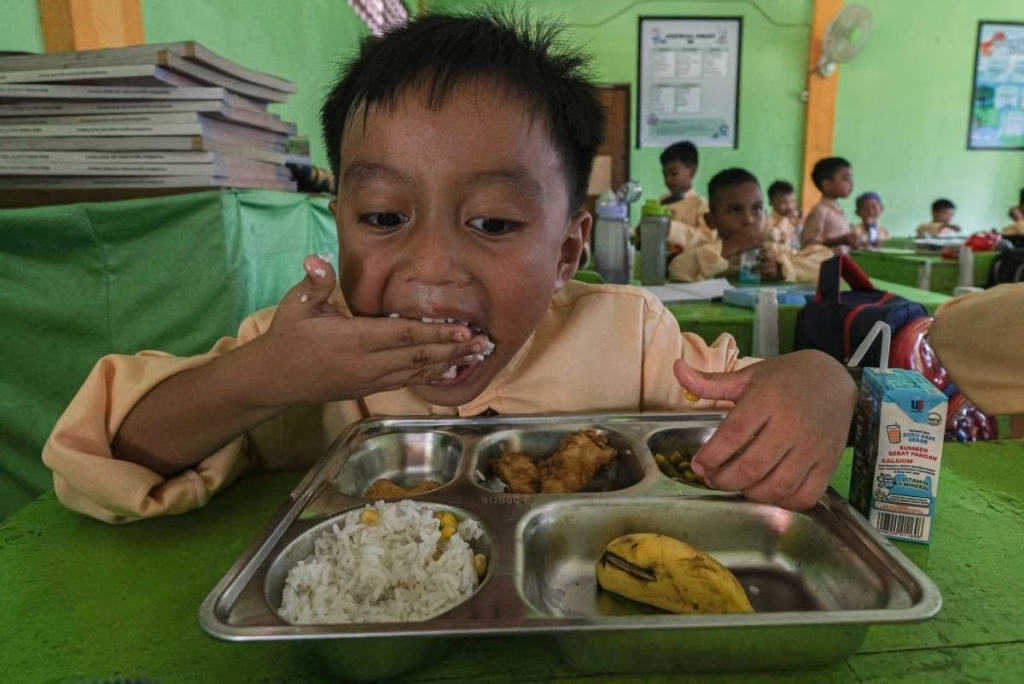
Into this already tense atmosphere comes the Makan Bergizi Gratis program, or MBG. On paper, it sounds wonderful: free nutritious meals for schoolchildren. Who could possibly argue with that? But the closer you look, the messier it gets. What was supposed to be a feel-good policy has turned into a lightning rod for anger, and honestly, it’s not hard to see why.
First, let’s talk about timing and priorities. Are free school meals really what Indonesia needs most right now? Walk into any public school outside Jakarta and you’ll see crumbling walls, overcrowded classrooms, and teachers who are paid so little they can barely make ends meet.

Honorary teachers who make up a huge chunk of the workforce often take home less than a minimum-wage worker. Yet here we are, pouring tens of trillions of rupiah into a meal program that many experts say could have waited.
With the rupiah weakening by the day, every rupiah of state spending is under the microscope. Investors are watching, and they don’t like what they see, which is a government that seems more interested in grand gestures than in fixing the basics.

It’s no wonder some analysts are linking the currency’s drop to concerns over fiscal discipline. When you spend big on something this controversial, people start asking hard questions about where their money is really going.
And then there’s the political angle, which is impossible to ignore. Let’s call it what it is: this program feels less like a genuine effort to fight malnutrition and more like a campaign stunt. A president eyeing re-election, handing out free meals to children while cameras roll it’s a classic move, and not a particularly subtle one.
The timing is just too convenient. Instead of tackling systemic issues that don’t make for good photo ops, theadministration chose a flashy, visible program that says “look what I did for your kids.”
But real leadership isn’t about photo ops. It’s about making tough choices, and this one feels like a shortcut to popularity rather than a thoughtful policy.
Now let’s get to the really disturbing part: the poisoning cases. Yes, you read that right. Children have actually gotten sick from eating these supposedly “nutritious” meals.
Multiple incidents, across different regions. Some kids ended up in hospital with stomach pains and vomiting. Parents are terrified, and frankly, they have every right to be. How does a program this big, this well-funded, end up serving food that makes children ill? The answer is simple: poor planning and zero oversight. Many of the kitchens running the program aren’t ready, no proper hygiene protocols, no safe storage, no reliable delivery system.
The people in charge clearly didn’t think things through. They were too busy rushing to meet deadlines and hit political targets to bother with basic safety checks. And when something goes wrong, who gets blamed? Not the politicians in Jakarta. It’s the local staff, the teachers, the cooks, the people who were thrown into this mess without proper training or support.
The lack of transparency only makes things worse. Try finding a clear breakdown of the MBG budget online. The government has been incredibly vague about where the money is going, who the suppliers are, and what standards they’re supposed to meet.
Watchdog groups have been asking for basic data for months and getting nowhere. In a country where people are already cynical about corruption, this kind of secrecy is like pouring gasoline on a fire. Every new poisoning case, every vague press release, every evasive answer from officials just confirms people’s worst suspicions: that this program was never really about the children.
It was about appearances.And here’s the irony: while we’re spending billions on free meals, millions of Indonesian kids still go to schools with no proper toilets, no libraries, and no safe drinking water.
Their teachers are overworked and underpaid. Their parents are struggling to afford rice and cooking oil. Wouldn’t it make more sense to fix those problems first? A hungry child needs food, yes, but they also need a safe place to learn and a teacher who isn’t exhausted from working two jobs.
The MBG program, in its current form, ignores all of that. It’s a one-size-fits-all solution to a problem that requires a much more nuanced approach. And the saddest part is, the children who need help the most—the poorest of the poor—are often the ones least likely to benefit from this chaotic rollout.
So where does that leave us? Let me be clear: feeding kids is not a bad goal. Nobody with a conscience would say that. But the way this program has been designed and executed is reckless. It’s risky. It’s rushed. And it’s drowning in politics.
At a time when the rupiah is fragile and public trust is even more fragile, the government should be showing restraint, responsibility, and honesty. Instead, we’re getting grand promises and half-baked delivery.
Until the administration admits its mistakes, hits pause, and rebuilds this program with real oversight and genuine priorities, the criticism won’t stop. It will only get louder. And honestly? That criticism is fully deserved.