






Written by : Nurul Hikmah
In a quiet village tucked deep in Montasik, lived a brother and sister, nine and five.
Faizul, the older one, was in fourth grade. His little sister, Aisyah, had just started kindergarten. They lived in a family housing complex owned by their grandmother, surrounded by aunts, uncles, and cousins. The place had once been their great-grandfather’s garden.
Rice fields stretched in every direction, with only a narrow path connecting their village to the outside world. From the main road, the village was invisible—hidden behind green and silence.
Every morning, Faizul went to school with his mother before she continued to work at a hospital in Aceh Besar. Aisyah sometimes went with her aunt to kindergarten nearby.
After school, Faizul was picked up by family, or walked home with friends—it wasn’t far. In the afternoons, if his father was home from military duty, he would take Faizul to the local Quran learning center.
Life was simple and full. If Faizul skipped his nap, he would drag Aisyah to their cousins’ houses—Nekyek’s or Nekti’s—where laughter filled the long afternoons.
When else can we play? he once thought.
Morning is school, afternoon is TPA, Sunday is family time… when do we get to play?
During Ramadan, Faizul fasted every day. His teachers praised him. He was known as a kind, obedient boy—loved by everyone.
Then Eid came.
There were new clothes, fireworks, visits to relatives, and endless laughter. The house was full, especially on the second day, when guests came from far away.
By the third night, everything changed.
Faizul fell ill with a fever and was rushed to the hospital. His condition quickly worsened. Tubes, oxygen, machines—everything was connected to his small body.
At one point, a nurse gently said, “Ma’am, let him rest. We’ll remove the oxygen for a while.”
His mother nodded, not knowing he needed it constantly. Not knowing the hospital didn’t have enough oxygen for every patient.
Faizul lay weak, barely conscious. He whispered softly, “I’m going to sleep, Mom… I’m sleepy.”
Those were his last words.
Soon after, he lost consciousness and was transferred to a larger hospital in Banda Aceh. Machines surrounded him in the PICU. Days passed.
Aisyah would send messages, “Tell Abang to get well soon… so we can play again.”
Their parents took turns whispering her words into his ear. Tears rolled down his face. He could hear—but he could not answer.
His father watched the heart monitor in silence, his chest tightening each time the screen fogged over. “Is he still there?”
Only when the line moved again did he breathe. “Alhamdulillah,” he whispered.
Faizul was their only son. Their hope. Aisyah’s protector.
But fate does not wait.
One Wednesday morning, during the days of Eid, Faizul was gone.
When the news reached me, I was visited my grieving old friend who just lost her child. Seven years old. Just two years younger than him.
I drove back to Montasik in silence.
At the house, there were no loud cries. Only quiet acceptance. They had seen his struggle.
Only Aisyah didn’t understand.
Why are there so many people?
She kept playing, laughing—too young to know what loss meant.
Days passed.
His father locked himself in his room, staring at photos. His mother sat on the stairs every morning, watching other children go to school.
Faizul no longer needed to be picked.
Not today. Not ever.
And Aisyah…
She made her own version of the truth.
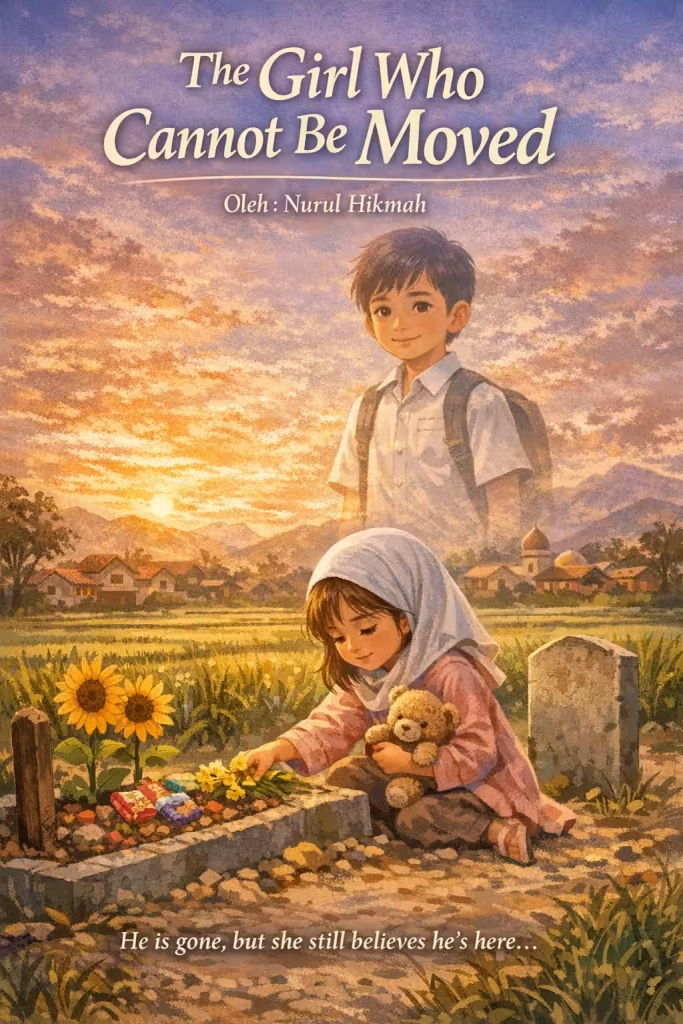
When she woke up, her brother had already gone to school. When she napped, he came home, then left again for TPA. At night, he returned while she slept.
She refused to lose him.
So in her world, he was still there.
Every time she got snacks, she would say,
“Buy two. One for Abang.”
Sometimes, she asked to visit his grave.
“This is for Abang,” she said, placing her small offerings gently on the ground.
Someone once said, give two sunflowers as a gift—so when the sun disappears, they can still face each other and share the light.
But now, only one remains.
Montasik, April 26, 2026













Diskusi