

By Dr. Al Chaidar Abdurrahman Puteh
Department of Anthropology, Malikussaleh University, Lhokseumawe, Aceh
The UN Forum on Minority Issues in Geneva in November 2025 offered a rare window into the lived realities of marginalized communities across the globe. Over two days and four sessions, minority representatives confronted state delegations with testimonies of discrimination, dispossession, and violence.
The forum’s theme, “The Contribution of Minorities to Diverse, Resilient, and Peaceful Societies,” was aspirational, but the voices of Kurds, Yazidis, Uyghurs, Rohingya, Malay Pattani, and Acehnese delegates revealed how states often fail to protect minorities, instead acting as predators toward those who are small in number, poor in resources, and politically powerless.


Ann Laura Stoler’s work provides a powerful theoretical lens to interpret these dynamics. In Capitalism and Confrontation in Sumatra’s Plantation Belt, 1870–1979 (1985), Stoler documented how colonial and postcolonial regimes in Indonesia used economic exploitation and plantation systems to discipline and marginalize local populations.
Her later work, Along the Archival Grain: Epistemic Anxieties and Colonial Common Sense (2009), explored how states construct knowledge and bureaucratic practices that normalize domination. Together, these works illuminate the concept of the “affective state”—a state that mobilizes emotions, care, and intimacy not to nurture its citizens, but to control, discipline, and prey upon them.

The “affective state” is not neutral. It operates through selective recognition and denial, deciding whose suffering counts and whose does not. In theory, the state embodies protection and responsibility; in practice, it often weaponizes affect to justify exclusion and exploitation. This was evident in Geneva, where exiled minority organizations challenged governments that claim to be guardians of unity but in reality perpetuate structural violence.
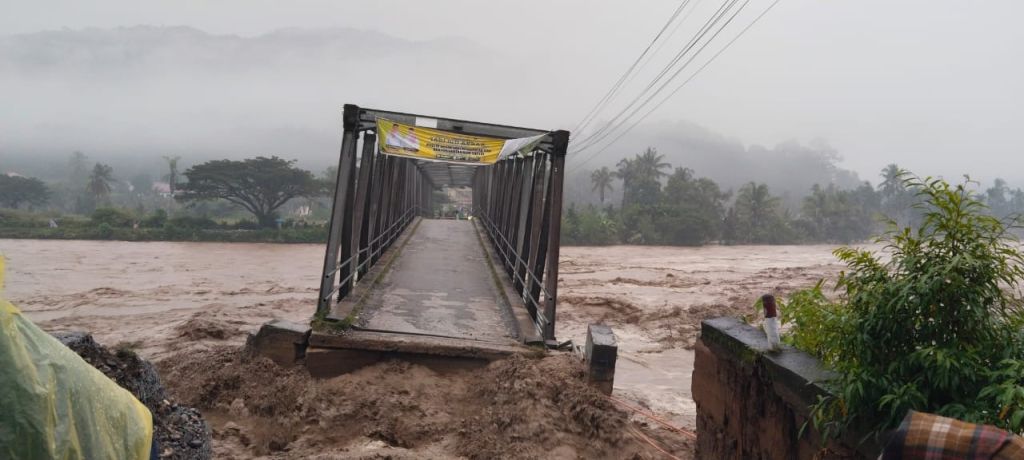
The case of Aceh exemplifies this paradox. Aceh’s forests have been stripped for palm oil plantations, a policy linked to directives from figures such as former forestry minister Zulkifli Hasan. This ecological exploitation has left Aceh vulnerable to floods, landslides, and earthquakes. When disasters strike—washing away homes, severing bridges, and destroying roads—the devastation is immense.


Yet the central government refuses to classify these events as national disasters, dismissing them as local problems. Aceh’s natural wealth is treated as national revenue, but its suffering is denied recognition. This refusal reflects the predatory logic of the affective state: extracting value from minorities while withholding care when they are most vulnerable.
In Geneva, Acehnese representatives joined others in exposing these contradictions. Just as the Rohingya spoke of statelessness, the Uyghurs of cultural erasure, and the Yazidis of genocide, Aceh’s testimony highlighted ecological exploitation and discriminatory disaster response as forms of structural violence. These interventions challenged the polished rhetoric of state representatives, revealing the gap between official narratives and lived realities.
The forum underscored that minority issues are not peripheral but central to the pursuit of justice and peace. It reminded us that the state, far from being a neutral arbiter, is often an affective predator—mobilizing care selectively, disciplining through neglect, and silencing through bureaucratic denial.
Stoler’s insights help us see that the durability of such predatory governance lies not only in material exploitation but also in the affective structures that normalize inequality.
For me, following the forum online was a deeply reflective experience. It was not merely an academic exercise but a reminder of the urgent need to rethink the role of the state in relation to minorities. If the state continues to act as predator rather than protector, then international platforms like the UN Forum become essential sanctuaries for truth-telling and solidarity.
They remind us that the struggle of marginalized communities is not isolated but interconnected, and that global attention is a necessary counterweight to local silencing.
Following the sessions online, I was struck by the courage of minority advocates who dared to confront states in an international arena. Their voices reaffirmed that forums like Geneva are vital sanctuaries where the silenced can speak, and where the world is challenged to listen. Until states transform from instruments of domination into genuine guarantors of dignity, these spaces remain essential for truth-telling and solidarity.
