




Oleh Dr. Al Chaidar Abdurrahman Puteh
In a world often desensitized to suffering by a constant deluge of information, the actions of Aaron Bushnell and Elias Rodriguez stand as stark, dramatic reminders of what many perceive as a profound moral failure of the West. Their desperate, extreme acts represent not just individual protests, but a symptom of deep-seated disillusionment with the silence and inaction surrounding the ongoing humanitarian crisis in Gaza and the broader Israeli-Palestinian conflict. They embody the anguish of those who feel Western powers, particularly the United States and its allies, are complicit in what they view as genocide, acting as the final, desperate frontier against perceived inhumanity.
Aaron Bushnell was a U.S. Air Force serviceman who tragically set himself on fire outside the Israeli Embassy in Washington, D.C., on February 25, 2024, in an act of protest against U.S. support for Israel in the Gaza conflict. His self-immolation was live-streamed on Twitch, where he declared that he would “no longer be complicit in genocide” before setting himself ablaze. As he burned, he repeatedly shouted “Free Palestine!”.
Bushnell’s act was widely discussed, with some viewing him as a martyr while others warned against glorifying such extreme forms of protest. His actions were part of a broader wave of demonstrations against the war in Gaza, and he was not the first to resort to self-immolation in protest. His death sparked debates about the effectiveness and morality of such acts in political activism.
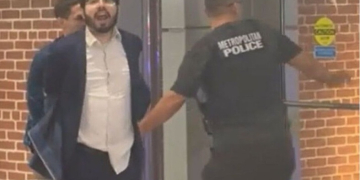
Elias Rodriguez is a 31-year-old Chicago resident who was identified as the suspect in the fatal shooting of two Israeli embassy staff members outside the Capital Jewish Museum in Washington, D.C., on May 21, 2025. Witnesses reported that Rodriguez shouted “Free Palestine” after the attack and later implied responsibility while in custody.
Rodriguez had a background in activism and was reportedly associated with far-left political movements. A manifesto believed to be written by him surfaced online, advocating for escalation in response to the Gaza conflict. Authorities also revealed that Rodriguez legally transported his firearm from Chicago to Washington, D.C., declaring it in his checked baggage.
The incident has sparked significant discussions about political extremism, security concerns, and the broader implications of activism turning violent. Rodriguez is currently facing federal and local murder charges, with the possibility of the death penalty.
Aaron Bushnell: A Blazing Indictment
Aaron Bushnell, an active-duty member of the U.S. Air Force, chose a method of protest as horrifying as it was unequivocal: self-immolation. In front of the Israeli Embassy in Washington D.C., he uttered chilling words that have since echoed globally: “I will no longer be complicit in genocide.” His act wasn’t just an end to his own life; it was a desperate, fiery attempt to ignite the conscience of a world he believed had become indifferent.
Bushnell’s final act was a raw, visceral outcry against what he saw as the U.S.’s unwavering support for Israel, even as reports of mass casualties, forced displacement, and infrastructural devastation in Gaza mounted. For many, his self-sacrifice became a tragic symbol of the moral distress felt by those who believe their governments are betraying fundamental human values for geopolitical interests. It was a protest born of profound despair, a last resort when all other avenues for change seemed to have failed.
Elias Rodriguez: The Steadfast Resistance
While perhaps not as widely publicized as Bushnell’s shocking act, Elias Rodriguez represents a similar spirit of unwavering resistance. His story, though less detailed in mainstream media, is part of a growing global movement of individuals who can no longer tolerate what they consider inhumane policies and practices. Whether through direct action, sustained advocacy, or various forms of civil disobedience, Rodriguez and countless others strive to pierce through official narratives, expose human rights violations, and demand accountability.
Elias embodies the persistent, often less visible, struggle against perceived injustice. He might be found at the forefront of demonstrations, organizing boycotts, or engaging in sit-ins – actions that, while not as immediately shocking as self-immolation, are crucial in maintaining pressure and raising awareness. His efforts, and those of individuals like him, highlight a refusal to passively accept what they see as a gross imbalance of power and a tragic indifference to suffering. They are the backbone of a movement that believes moral responsibility demands action, even when institutions fail.
A Mirror to Western Inaction
The extreme actions of Bushnell and the steadfast resistance of Rodriguez powerfully reflect a widespread perception of Western moral failure regarding the Israeli-Palestinian conflict. Many argue that the silence, inaction, or outright support from the U.S. and its allies for Israel’s military operations, even in the face of mounting evidence of atrocities, amounts to complicity in an alleged genocide. This perceived moral vacuum fuels immense frustration among citizens who believe their governments are sacrificing universal humanitarian values for strategic gain.
For Bushnell and Rodriguez, the stark power imbalance and the global community’s apparent inability to halt what they consider “inhumane brutality” were primary motivators. They saw themselves as among the last few individuals left to push back against this tide of injustice, where diplomacy had failed, peaceful protests were ignored, and international bodies seemed powerless. They are the voices refusing to accept the status quo, even if it means extreme personal sacrifice.
The Unavoidable Question: More Bushnells and Rodriguezes?
Given the continuing scale of suffering in Gaza and the deepening global polarization, it’s not unreasonable to consider that more Aaron Bushnells and Elias Rodriguezes may emerge in the future. This profoundly asymmetrical conflict, with its devastating human toll, has ignited deep anger and urgency among many worldwide. When conventional paths to change appear blocked, individuals driven by a strong moral compass may feel compelled to take increasingly drastic measures as a final attempt to awaken a seemingly slumbering world.
The stories of Bushnell and Rodriguez serve as painful reminders that there are limits to human tolerance for injustice. They are a stark warning that when institutions fail and voices are ignored, individuals may feel called to make the ultimate sacrifice for what they believe is right. The pressing question is not whether there will be more “Bushnells and Rodriguezes,” but whether the world will finally heed their desperate calls before further sacrifices become inevitable.
Aaron Bushnell and Elias Rodrigues touch on the broader discussion about how acts of violence are framed and interpreted depending on the perpetrator’s background. The way media and political institutions categorize incidents—whether as terrorism, radical activism, or lone acts of violence—often reflects deeper societal biases and geopolitical narratives.
There has long been debate about whether similar actions are labeled differently based on religious, ethnic, or ideological affiliations. In many cases, attacks perpetrated by individuals from certain backgrounds may be more swiftly branded as terrorism, while others might be framed as politically motivated crimes or mental health crises.




This disparity in framing often leads to discussions about fairness in media representation, law enforcement responses, and public perception. It raises important questions about how narratives are shaped and whose voices dominate the conversation about political violence.
The incident involving Bushnell and Rodriguez undoubtedly contributes to this ongoing discourse about bias, justice, and the way different groups are perceived in global conflicts. It’s a critical issue worth analyzing further.
🔥 5 Artikel Terbanyak Dibaca Minggu Ini