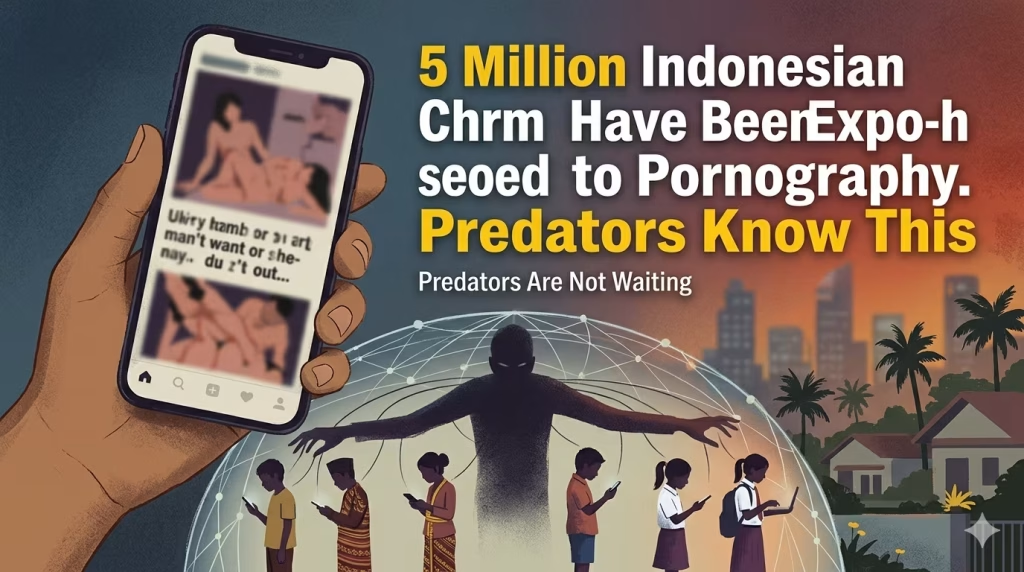
5 Million Indonesian Children Have Been Exposed to Pornography. Predators Know This


By Heba Abayaa
A recent figure has been circulating: approximately 5 million children in Indonesia have been exposed to pornography. That is not just a statistic. It is a warning. But there is a deeper layer to this problem that rarely gets discussed.
Sex predators are fully aware of this number, and they have adapted their methods accordingly.


How Predators Exploit Early Exposure
The old image of a predator lurking in a dark alley no longer reflects reality. Today, most grooming begins online, and pornography is often the entry point.


Consider a common scenario. A child receives a link from a classmate. Curious, they click it. Within seconds, they have viewed explicit content. Shame and fear immediately set in, so they tell no one.
Then, days later, a message arrives from a stranger. “I saw what you watched. Do what I say, or I will tell your parents.”


That child is now trapped. This is not rare. It happens daily across Indonesia, from Jakarta to small villages.
Another tactic is normalisation. Children who see pornography before they understand sexuality often come to believe that aggressive or degrading behaviour is typical.
Predators exploit this confusion by saying, “Everyone does this. It is normal.” Without proper guidance, the child has no reason to doubt them.
There is also the slow method. A predator joins a popular gaming platform such as Mobile Legends or Free Fire. They pose as a friendly older peer. They share one “funny” video, then another. The child believes they have made a friend. In reality, they are being groomed.
Why Indonesian Children Are Especially Vulnerable
Several factors make this problem particularly severe in Indonesia.
First, open discussion about sexuality remains culturally taboo. Many parents feel uncomfortable addressing the topic. Many schools avoid it entirely. As a result, children turn to the internet for answers, and the internet often answers with pornography.
Second, shame silences victims. A child who has seen porn feels embarrassed and fears punishment. They will rarely report what happened. Predators understand this dynamic perfectly and weaponise it.
Third, widespread smartphone ownership and affordable data mean that even young children have unfiltered access to the internet. A nine-year-old can encounter material that no child should ever see, often with no adult supervision.
A Real-World Example
Consider a documented case from Jakarta. A thirteen-year-old girl joined a Telegram group at a friend’s invitation. The group shared what members called “funny adult videos.” Soon, a man messaged her privately, offering more content. Over several weeks, he persuaded her to send personal photos. When she tried to end contact, he threatened to share everything with her father.
This is not an isolated incident. Organisations such as ECPAT Indonesia and the Ministry of Women’s Empowerment have recorded many similar cases.
Practical Steps That Work
Banning the internet is not realistic. However, several concrete actions can make a meaningful difference.
Have calm, honest conversations. The single most effective protection is a child who knows they can report something disturbing without being punished. Say this directly: “If you ever see something strange online, come to me. You are not in trouble. I just want to help.”
Install parental controls. Think of filters as seatbelts for the digital world. Free tools like Google Family Link or Mobicip take only a few minutes to set up.
Teach a simple rule. No reasonable adult will ever ask a child to keep a secret involving videos or photos. If someone does, that person is dangerous.
Report without hesitation. If a child is targeted, contact the police, KemenPPPA, or a local child protection organisation. Predators rely on families staying silent out of shame. Do not give them that advantage.
Closing Thought
Five million is more than a number. Behind it are real children—neighbours, classmates, family members.
We cannot eliminate every harmful website. But we can raise children who understand safety, who are not afraid to speak up, and who recognise a predator’s tactics. Start that conversation today. Not tomorrow. Because the predators are not waiting.