

Mohd Abbas Abdul Razak and Muntaha Artalim Zaim
The need for philosophy in the Muslim world is a highly contested issue. Those who oppose it argue that the Qur’an is sufficient and that Muslims should not rely on the philosophical ideas of the ancient world. On the other hand, those who recognize the beauty and benefit of engaging in philosophy advocate for its role in shaping the way we perceive and understand the natural world and the reason for our existence in this world.
Historically, the development of philosophy in the Muslim caliphates began after the time of the Khulafāʾal-Rāshidīn (633–661). As the Muslim empires expanded, their scholars came into close contact with the philosophical traditions of earlier civilizations such as the Greek, Persian, and Indian. The growth of philosophy as a vital and dynamic discipline reached its peak during the Abbasid period (750–1258), particularly in Baghdad.
At the same time, a parallel intellectual flourishing occurred in Muslim Spain (711–1492), under a dynasty established by one of the surviving members of the Umayyad caliphate. Later, similar developments took place in Damascus and Cairo. These centers of learning actively participated in translating ancient manuscripts from various languages into Arabic, laying the foundation for a rich tradition of philosophical inquiry in the Muslim world.
The Age-Old Philosophical Debate
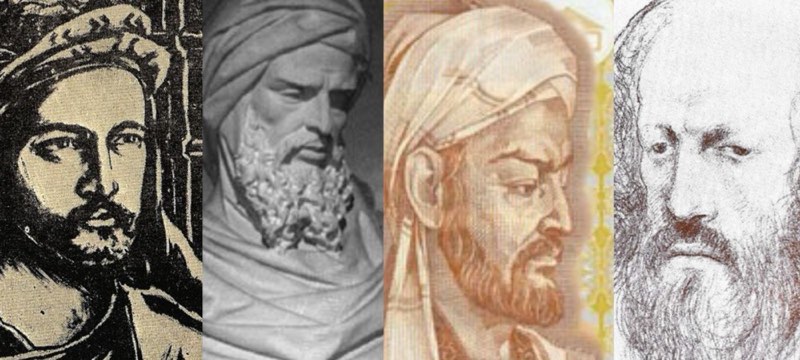
The most famous Muslim philosophers during the peak of Islamic civilization were Al-Kindi (801–873), Al-Farabi (872–950), and Ibn Sina (980–1037). If anyone should be named the father of philosophy in the Muslim world, it is Al-Kindi, as he was the first to introduce the philosophical ideas of the Greeks, particularly those of Plato and Aristotle.
Al-Ghazali (1058–1111), who came after the aforementioned Muslim philosophers, was a unique scholar in the Muslim world. During his time, he was regarded as a theologian, Sufi, and philosopher. Unlike others, he did not like to be identified as a philosopher due to the polemics associated with the discipline. Early Muslim scholars who became deeply engaged with Greek thought, particularly that of Socrates (470–399 BCE), Plato (428–347 BCE), and Aristotle (384–322 BCE), often failed to recognize the pitfalls and slippery slopes inherent in philosophy. Al-Ghazali, aware of these problematic areas, introduced a new approach. He was the first to advocate for the “3As” approach: adopt, adapt, and assimilate. As a scholar who experienced spiritual enlightenment through knowledge and deep contemplation, he called for a critical evaluation of Greek thought. Al-Ghazali authored Tahāfut al-Falāsifah (The Incoherence of the Philosophers) to caution Muslim thinkers against uncritically glorifying foreign philosophies. In this monumental work, he identified twenty major errors committed by earlier Muslim philosophers.
Ever since Al-Ghazali wrote Tahāfut al-Falāsifah (The Incoherence of the Philosophers), philosophy has fallen into a deep slumber in the Muslim world. Long after Al-Ghazali’s time, a great philosopher emerged in Cordoba, Spain—none other than Ibn Rushd. If any scholar deserves credit for bringing philosophy out of its hibernation in the Muslim world, it is Ibn Rushd. As the last philosopher of the golden era of the Muslims, Ibn Rushd produced a significant work on philosophy titled Tahāfut al-Tahāfut (The Incoherence of the Incoherence), written as a critique of Al-Ghazali, whom he blamed for the ‘demise’ of philosophy in the Islamic world.
Out of his deep love for philosophy, Ibn Rushd refuted Al-Ghazali’s arguments by asserting that the Qur’an encourages critical, creative, and analytical thinking, as well as the observation and contemplation of God’s magnificent creation in the universe. To him, such intellectual pursuits align with the philosophical approach to understanding one’s existence within the broader spectrum of God’s creation. In his defence of philosophy, Ibn Rushd believed that there is a compendium of Qur’anic verses that are philosophical. As such, he felt it was wrong of Al-Ghazali to criticize philosophy and the philosophers.
When looking into the debates between Al-Ghazali and Ibn Rushd, a student of philosophy will acknowledge that both present sound arguments for and against philosophy. Rather than taking sides, a true seeker of knowledge in Islam will appreciate their viewpoints and integrate them for his or her own intellectual enrichment. Philosophy, per se, is a field of knowledge concerned with meaning, truth, and wisdom on any subject that falls within its scope.
It is natural for one trained in the philosophical method of thinking to follow a pattern that includes syllogism, thesis, antithesis, and synthesis. Furthermore, the philosophical mind is capable of examining an issue from multiple perspectives, offering in-depth analysis, and perhaps debating a given topic more persuasively than a simple mind.
European Colonization
Western colonization of Muslim lands deprived the masses of their freedom to express themselves and grow intellectually. The momentum that had been created during the golden era of Islam, when Muslims held a dominant position as philosophers, scholars, and scientists, was lost during European colonization. Living under colonial rule led to a stagnation in intellectual development. The Muslim Ummah was no longer as productive and creative as before. To a large extent, colonization fostered a slave mentality that pushed the Ummah toward imitating foreign cultures.



Some Prominent Muslim Philosophers of the Modern Era
Allama Muhammad Iqbal (1877–1938), as a visionary Muslim philosopher of the 20th century, aimed to bring about a transformational change in the Muslim Ummah. Iqbal intended to awaken the Muslim Ummah from its deep ‘slumber’ into active participation in worldly affairs, especially in reclaiming its independence. With a strong foundation in Islamic studies, Sufism, and Western philosophical ideas, he eclectically formulated a new philosophy, primarily for the young and upcoming Muslim generation of his time.
Though his philosophy was radically different from earlier ideas that emphasized the subduing of the ego, he persistently called upon the masses to awaken the hidden potential of the human psyche. Through his Ego philosophy, which he termed the Khudi philosophy, he focused on the growth of the human ego that emerges from man’s interaction with God, Nature, and the other egos within society.


Iqbal strongly believed that the ego cannot bloom into its ideal state if one chooses to live in isolation. It is through the ego’s connection with God and its constant struggle in life that a strong, dynamic personality is developed. As a religious philosopher, Iqbal aspired, through his philosophy, to bring a sense of the heavenly abode to this world, with the hope of transforming it into a better place for humanity.

Seyyed Hossein Nasr (1933-) is a well-established Iranian Muslim scholar in the West. As a versatile thinker, he specializes in theology, philosophy, and Sufism. As a modern-day philosopher, he has produced a substantial body of work on Islamic metaphysics, Sufism, environmental ethics, and traditional philosophy. Unlike many of his contemporaries, he believes in Perennial Philosophy. The teachings of this philosophy assert that at the very core of all authentic religions lies a single metaphysical truth.
As a proponent of Perennial Philosophy, Nasr shows great enthusiasm for interfaith religious dialogues. Moreover, he is convinced that modernity has led humanity away from the pursuit of wisdom. As a result, human beings suffer from social, spiritual, and environmental crises.
A scholar deeply rooted in traditional philosophy, Nasr shows profound interest in the Islamic metaphysical ideas of Ibn Sina (980-1037), Suhrawardy (1154–1191), and Mulla Sadra (1571–1640). In his book Man and Nature: The Spiritual Crisis of Modern Man, he emphasizes that the modern environmental crisis stems from man’s detachment from the spiritual and metaphysical dimensions of life.
Ali Shariati (1933–1977) was an Iranian-born sociologist, Islamic thinker, and philosopher. During the peak of his career, he was an influential thinker who managed to attract the attention of many Islamic youth in Iran and around the Muslim world. Many believe that Shariati’s political ideas contributed greatly to the outbreak of the Iranian Revolution.
Through many of his works, Shariati showed his Islamic spirit, which called for social justice, spiritual awakening, and anti-imperialism. His academic writings were inspired by Islamic history, sociology, and the parts of Western philosophy that align with Islamic teachings.
Having studied philosophy in the West, Shariati, as a Muslim scholar, critically analyzed the ideas of Frantz Fanon (1925–1961), Jean-Paul Sartre (1905–1980), and Karl Marx (1818–1883). It was only after a serious evaluation that he adopted some of their philosophical views.
Lastly, it can be said that Shariati saw Islam as more than just a spiritual faith. To him, Islam was also a force that stood for social justice, liberation, and resistance to oppression.
Syed Muhammad Naquib al-Attas (1931–) was born in Bogor, Indonesia, and later established himself as an Islamic scholar and philosopher in Malaysia. As an influential thinker, he has become a source of pride for the Malay world. Al-Attas is famously known for his call for the Islamization of contemporary knowledge. In his works such as Islam and Secularism, The Concept of Education in Islam, and others, he emphasized that, as a result of European colonization, education is no longer viewed as a medium that brings man closer to God.
In criticizing the Western philosophy of education, al-Attas noted that its ultimate goal is to produce a good citizen, an idea that traces back to Plato. In contrast, the Islamic concept of education aims to produce a good man. A good man, according to al-Attas, is a universal being who can nurture a meaningful relationship with God, the self, nature, and all of humanity.
As a philosopher, he demonstrated foresight in predicting the consequences for the Muslim ummah should it blindly follow Western trends in education. He argued that Western secular education, rooted in dualism, materialism, and relativism, could lead Muslims into spiritual emptiness, alienation from their own humanity, and a loss of cultural identity.
In addition to his critique of Western education, al-Attas proposed that the ideal Islamic concept of education involves the instilling of adab, which encompasses proper conduct, good manners, etiquette, and discipline. Ultimately, he believes that the loss of adab leads to confusion about the purpose of knowledge, a decline in wisdom, and a moral crisis within Muslim society.
Concluding Remarks:
Philosophy is a discipline devoted to the pursuit of wisdom and truth, and it deserves its rightful place in the Muslim world. This article provides an overview of the development of philosophy during the early period of Islamic expansion, as well as a brief account of the ideas of prominent Muslim philosophers who have emerged in the modern era. In addition to those discussed in this article, there are other thinkers who are currently gaining recognition in both the East and the West.
(The views expressed are those of Dr. Mohd Abbas Abdul Razak, Department of Fundamental and Interdisciplinary Studies & Dr. Muntaha Artalim Zaim from the Department of Fiqh and Usul Fiqh, AHAS KIRKHS, IIUM, and do not necessarily reflect the views of Potret Online)
🔥 5 Artikel Terbanyak Dibaca Minggu Ini





Discussion about this post