



Dr. Al Chaidar Abdurrahman Puteh
Department of Anthropology, Malikussaleh University, Lhokseumawe, Aceh
The statement by Minister of Agriculture Amran Sulaeman, accusing the import of 250 tons of rice by the Sabang Free Trade Zone and Free Port Authority (BPKS) of being illegal, is a reactionary and unintelligent remark.
This accusation is not only misguided, but also disregards the special legal framework granted to Aceh through the Law on the Governing of Aceh (UUPA) and the Helsinki Memorandum of Understanding (MoU).
More importantly, it ignores the agricultural crisis that has long plagued Aceh and the urgent need of the people of Sabang for affordable rice.
The UUPA explicitly grants Aceh broad authority to regulate governance, including economic and international trade matters. Article 167 of the UUPA states that the Aceh Government has the authority to regulate and manage public affairs in all sectors except those reserved for the central government.
This provision establishes Aceh’s right to manage cross-border trade according to local needs. Furthermore, Law No. 37 of 2000 designates the entire territory of Sabang as a Free Trade Zone and Free Port.
On this legal basis, rice imports through Sabang are clearly lawful and constitutional, not illegal as alleged by the Minister of Agriculture.
The Helsinki MoU, signed on August 15, 2005 between the Government of Indonesia and the Free Aceh Movement (GAM), further strengthens this legitimacy. Clause 1.1.2 stipulates that Aceh has the authority to regulate and manage all public affairs except foreign relations, external defense, national security, monetary and fiscal policy, and religion.

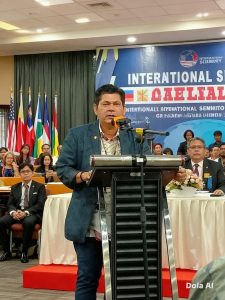
Clause 1.3.1 affirms that Aceh has the right to manage its own economic life, including international trade, investment, and economic development. Thus, accusations of illegality against rice imports through Sabang directly contradict the peace agreement recognized internationally.
Yet this debate is not only about legality but also about how globalization operates in local contexts. Anna Tsing, in her seminal work Friction: An Ethnography of Global Connection (2005), argues that globalization does not flow smoothly like water on a highway. Instead, globalization occurs through friction, where global ideas, capital, and policies can only move and become effective if they grip local realities.
In the case of rice imports through Sabang, this friction is evident: central government policies, rigid and formalistic, clash with Aceh’s urgent local needs. For international trade to truly benefit the people, it must be rooted in Aceh’s socio-economic conditions, not imposed through bureaucratic abstractions from Jakarta.
The agricultural crisis in Aceh illustrates the depth of these local realities. For more than fifteen years, irrigation systems have not been developed, leaving rice fields dependent on unpredictable rainfall. The expansion of oil palm plantations has worsened the situation, causing floods that damage farmland. Rice prices in Aceh continue to soar, burdening household purchasing power, especially in Sabang, which faces geographic isolation.
In such circumstances, rice imports are not illegal acts but emergency strategies to ensure food security. To reject or criminalize them is to turn a blind eye to the suffering of the people.
The social consequences of expensive rice are tangible. Food instability can trigger unrest, weaken public trust in the central government, and widen the gap between Jakarta and Aceh. The Minister’s reactionary statement risks undermining the spirit of reconciliation built through the Helsinki MoU.
Viewed through Tsing’s lens, the accusation of illegality is a prime example of how top-down globalization fails to grip Aceh’s local realities. Conversely, policies that respect the UUPA and the Helsinki MoU represent globalization that is rooted, moving through friction, and producing tangible benefits for society.
In conclusion, Minister Amran Sulaeman’s accusation against rice imports in Sabang is evidence of bureaucratic incompetence at the national level—failing to understand Aceh’s special legal framework, its social realities, and the dynamics of globalization that are inherently frictional.



Supporting BPKS’s rice import policy is the right step to guarantee food security and uphold Aceh’s autonomy. With the foundation of the UUPA, the Sabang Free Trade Zone Law, the Helsinki MoU, and Anna Tsing’s theory of friction, rice imports through Sabang are lawful, constitutional, and a necessary response to Aceh’s prolonged food crisis.

Reference:
Tsing, Anna Lowenhaupt. Friction: An Ethnography of Global Connection. Princeton University Press, 2005.
🔥 5 Artikel Terbanyak Dibaca Minggu Ini




Discussion about this post